
Bali from above — rice terraces, temples, and ocean as far as the eye can see.
We've been travelling to Bali for over a decade and living between Bali and Brisbane for several years. In that time we've made most of the mistakes, discovered most of the shortcuts, and developed strong opinions about almost everything. Here's the honest, practical advice we give to every guest who stays with us — the things that make the difference between a good trip and a great one.
Best Time to Visit
Bali has two seasons: dry (May to September) and wet (October to April). The dry season is the most popular — and for good reason. Clear skies, lower humidity, and consistent surf make it the most comfortable time to visit.
That said, the wet season has its own charm. Prices are lower, crowds are thinner, and the landscape turns an almost impossible shade of green. Rainfall tends to come in short, intense bursts rather than all-day drizzle — you can often have a perfectly fine beach day with a dramatic afternoon storm thrown in for free.
Peak season (July-August and Christmas/New Year) brings the biggest crowds and highest prices. Book accommodation well in advance if you're visiting during these periods.
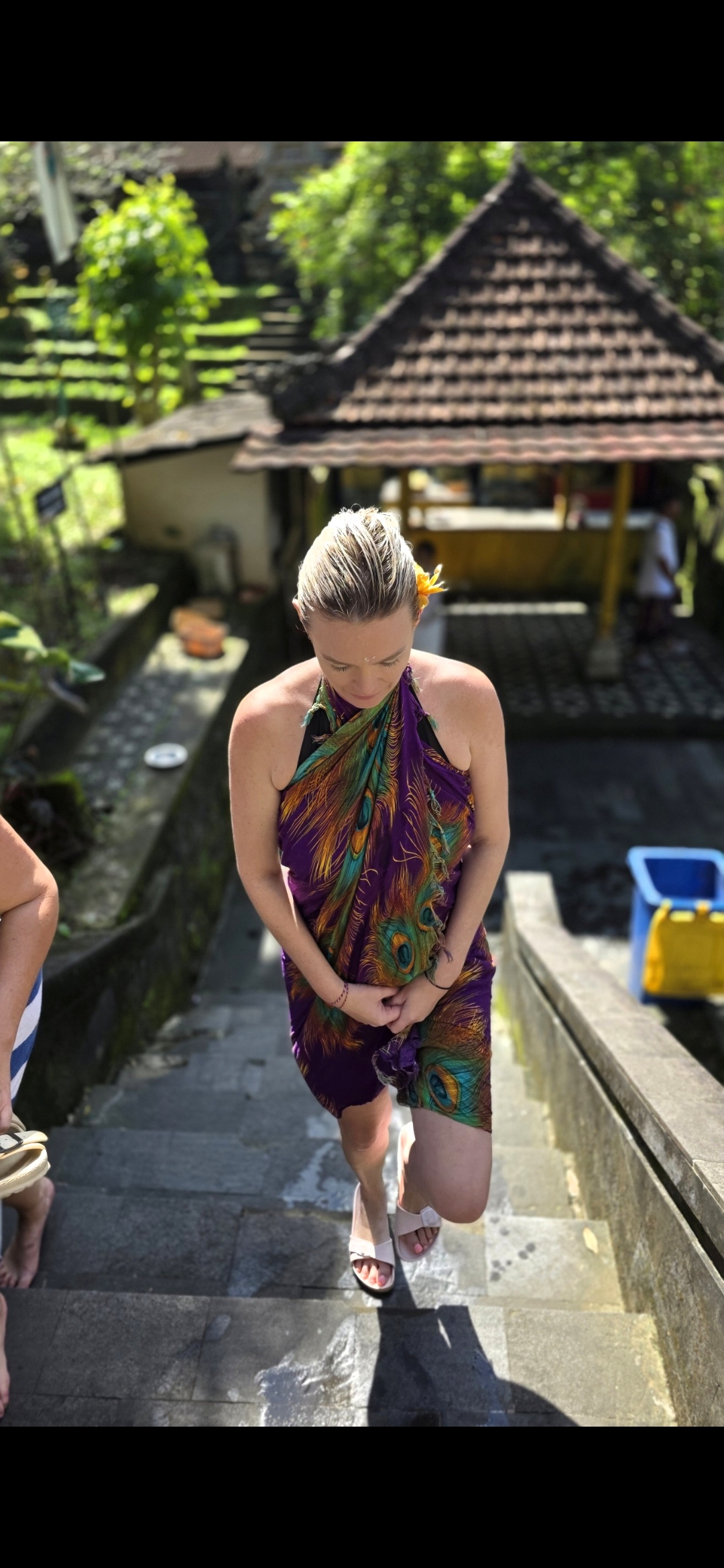
Balinese Hinduism permeates every aspect of daily life — and treating it with respect enriches your trip enormously.
Getting Around Bali
Bali's traffic is notorious, and getting around requires some planning. Here are your main options:
- Scooter hire — around 150k IDR per day. The most flexible option and how most locals get around. Only do this if you're a confident rider — Bali roads can be chaotic and the road rules take some getting used to.
- Grab and Gojek — the Southeast Asian equivalents of Uber. Essential apps to download before you arrive. Cheap, reliable and available almost everywhere. Note: some areas (particularly Seminyak and Kuta) have taxi cartels that try to block ride-share apps — use them anyway.
- Private driver — for full-day trips or airport transfers, a private driver is wonderfully affordable. Ask your villa host to recommend someone trustworthy.
- Taxis — Blue Bird taxis are the only reliable metered taxi company. Avoid unlicensed cabs entirely.
Money and Payments
Indonesia uses the Indonesian Rupiah (IDR). Current exchange rates hover around 12,000-12,500 IDR to the Australian dollar, though this changes regularly — check before you travel.
ATMs are widely available in tourist areas. Use bank ATMs (BCA and Mandiri are reliable) rather than standalone machines in shops, which often charge high fees and have been linked to card skimming.
Cash is still essential for local warungs, markets, temple entry fees, beach fees, and smaller businesses. Always carry a mix of small notes.
Cards are accepted at most restaurants, large shops and hotels. Always pay in IDR rather than your home currency if given the option — the exchange rate on card machines is usually unfavourable.

A hired scooter gives you the most flexibility — but only ride one if you're genuinely comfortable on a bike.
Health and Safety
Bali Belly (traveller's diarrhoea) is a real risk. Avoid drinking tap water, ice from unknown sources, and raw vegetables that may have been washed in tap water at lower-end establishments. Drink bottled water and use it for brushing teeth.
Mosquitoes are present year-round. Use a DEET-based repellent, particularly around sunset. Dengue fever is present in Bali — if you develop a fever in the days after leaving, see a doctor and mention you've been to Bali.
Sun — the equatorial sun is significantly more intense than Australian sun. SPF50 sunscreen, hats and shade are non-negotiable, particularly at the beach.
Medical care — Bali has good private hospitals (BIMC in Kuta and Nusa Dua, Siloam in Denpasar) that are well equipped for tourist health needs. Travel insurance is strongly recommended.
Cultural Respect
Bali is a deeply spiritual place and Balinese Hinduism permeates every aspect of daily life. Treating this with genuine respect will enrich your experience enormously.
- Temple dress — cover your shoulders and knees when visiting temples. Sarongs and sashes are usually available to borrow at temple entrances.
- Offerings — small woven palm leaf trays with flowers, incense and food are placed everywhere as daily offerings. Step around them, never over them.
- Photography — always ask before photographing ceremonies or people in traditional dress. Most Balinese are happy to be photographed but asking shows respect.
- Head and feet — in Balinese culture, the head is sacred and the feet are profane. Don't pat people on the head, and avoid pointing your feet at sacred objects or people.
Bargaining and Shopping
Bargaining is expected and acceptable at markets and with unlicensed vendors. Start at around half the asking price and negotiate from there. Be friendly and light-hearted about it — bargaining is a social activity, not a confrontation.
Fixed-price shops, restaurants and supermarkets don't negotiate. Use common sense about when bargaining is appropriate.
SIM Cards and Connectivity
Buy a local SIM card at the airport or in any phone shop. Telkomsel and Indosat are the most reliable networks. A SIM with 20-30GB of data costs around 80-120k IDR and keeps you connected everywhere. Much better than roaming charges.
Tipping
Tipping is not mandatory in Bali but is always appreciated. 10% is generous at restaurants. Round up taxi fares. A small tip for villa or hotel housekeeping (20-50k IDR per day) is very kind and means a lot.
What to Pack
- Light, breathable clothing (cotton or linen)
- A light layer for air-conditioned restaurants and long flights
- Reef-safe sunscreen (regular sunscreen is damaging to Bali's coral reefs)
- DEET mosquito repellent
- Universal power adapter (Bali uses Type C and F sockets)
- A sarong (useful for temples, beaches and impromptu cover-ups)
- Comfortable sandals or thongs for walking
- A dry bag if you plan to be near water

Slow down. The best moments in Bali are the ones you didn't plan.
The Most Important Thing
Slow down. Bali rewards patience and presence in a way that few places do. The best moments aren't usually the ones you planned — they're the chance encounter at a temple ceremony, the warung owner who insists you try her mother's recipe, the sunset that stops you mid-sentence. Give yourself time to find them.
Ready to experience Bali?
Stay at Casa de Loto in Canggu or Unite By The Sea in Uluwatu — our private villas put you right in the heart of it all.
Check availability