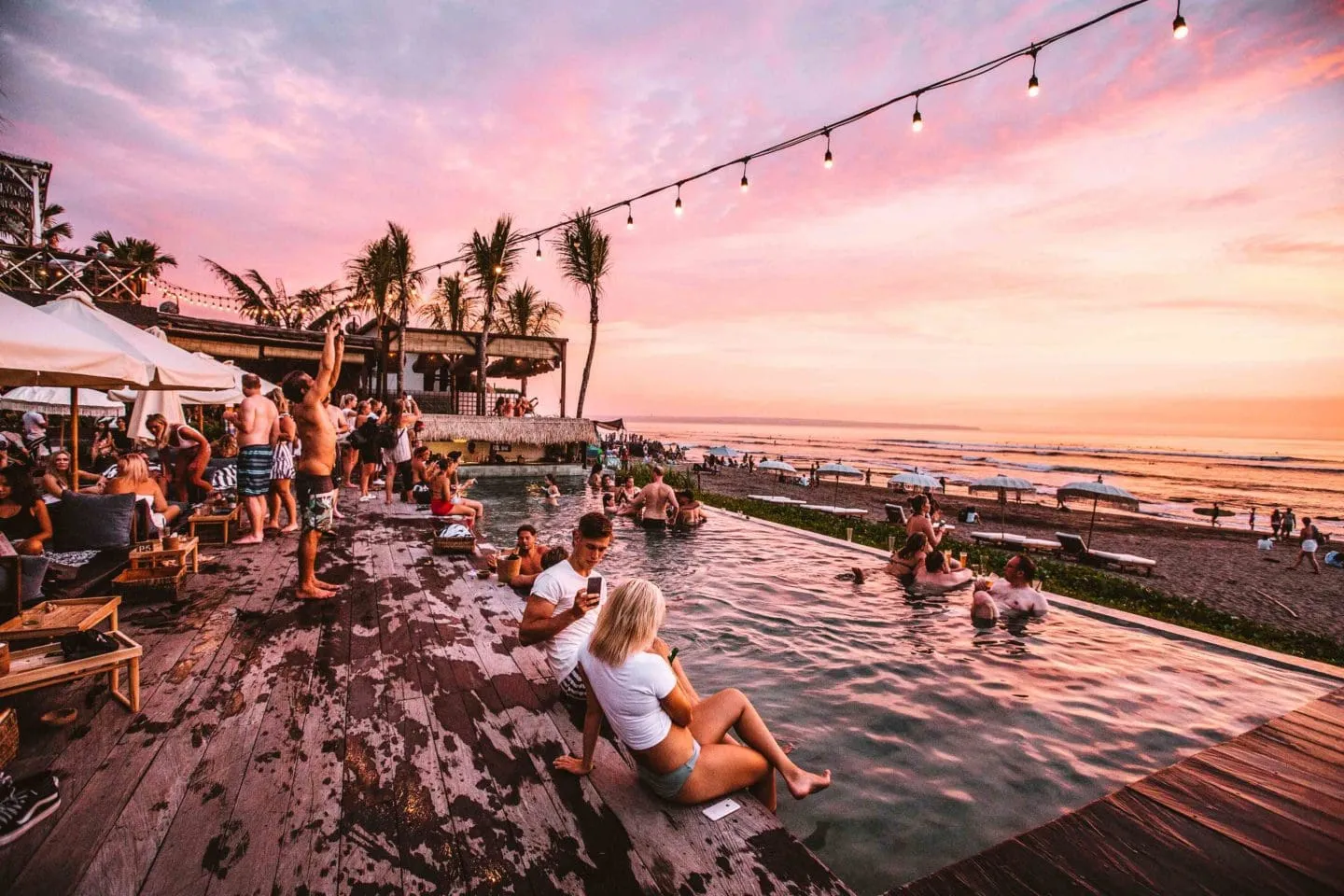
Canggu, where the surf, the rice fields and the café culture all collide.
Canggu has a way of getting under your skin. What starts as a two-week holiday has a habit of turning into a month, then two, then a permanent life change. It manages to feel both wildly cosmopolitan and deeply Balinese at the same time, and once you've had your first morning coffee looking over the rice fields you'll understand why.
We've been coming to Canggu for over ten years and have watched it grow from a quiet surf village into one of Southeast Asia's most sought-after places to stay. This is our honest guide to what to do in Canggu, where to go and how to make the most of your time.
1. Surf Batu Bolong and Echo Beach
Canggu is a surf town at heart. Batu Bolong has softer, rolling waves that suit beginners and longboarders. Echo Beach to the north is more exposed and more powerful, better for experienced surfers chasing a proper ride.
If you've never surfed, Canggu is one of the best places in the world to learn. Surf schools line the beach offering two-hour lessons, typically a few hundred thousand rupiah including the board, and most will have you standing up in the first session. Even if surfing isn't your thing, watching the locals at sunset is entertainment in itself.

Batu Bolong suits learners and experienced surfers alike.
2. Watch the sunset at Tanah Lot
About 20–30 minutes from central Canggu, Tanah Lot is one of Bali's most famous temples: a sea temple on a rock outcrop surrounded by surf, cut off from the shore at high tide. At sunset, with the sky turning gold and pink behind it, it's genuinely breathtaking.
Arrive by late afternoon to find parking and a spot on the cliffs. There's an entry fee per person, paid at the gate. Only worshippers can climb onto the temple itself, but the view from the mainland is the point.
3. Have sunset drinks on the beach
Every evening the whole of Canggu seems to drift to the sand. At Batu Bolong and Echo Beach, beanbags and umbrellas come out, the warungs light their grills and the surfers ride the last waves. Grab a cold Bintang or a fresh coconut, settle in and watch the show. It costs next to nothing and is one of the best things to do in Canggu.
4. Find quieter sand at Pererenan and Seseh
Just north-west of Echo Beach, Pererenan and Seseh are where Canggu goes to slow down. The black-sand beaches are wide and far less crowded, the cafés are relaxed, and the sunsets are every bit as good. It's the perfect escape when the main strip feels busy.
5. Walk or cycle the rice fields
The rice fields that weave through Canggu are one of its greatest treasures, and increasingly under pressure from development. The back lanes behind Berawa, Tumbak Bayuh and Pererenan still have stretches of working paddies where you can walk, cycle or just sit and breathe.
Hire a push bike from one of the shops on the main roads and head inland. You'll come across small temples, farmers at work and the kind of quiet that reminds you why you came to Bali.
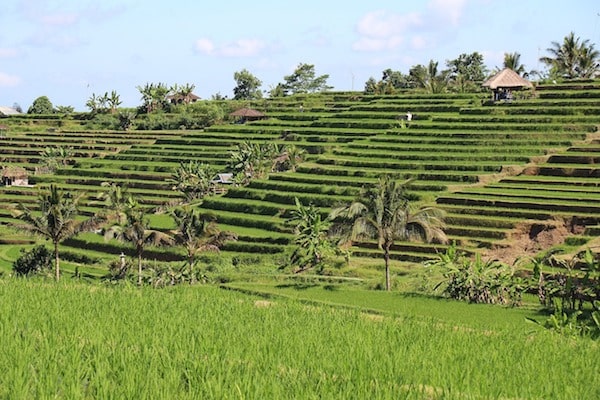
Canggu's rice fields are one of the area's greatest, and most threatened, treasures.
6. Spend a day at a beach club
Canggu's beach clubs are made for long, lazy days: pools, day beds, DJs and ocean views. Finns Beach Club in Berawa is the big, lively one. The Lawn on Batu Bolong is more laid-back, with a green lawn looking straight out to the surf. La Brisa near Echo Beach is built from reclaimed fishing boats and is one of the prettiest spots in Bali for sunset.
7. Eat at local warungs
The food in Canggu is exceptional and wonderfully varied. You can eat superb Indonesian food for a few dollars at a family-run warung, or sit down to a tasting menu at a serious restaurant. A few of our favourites:
- Warung Dandelion: tiny, no frills and always busy, with some of the best nasi goreng in Canggu.
- The Shady Shack: wholesome plant-based food in a lovely garden setting by the rice fields.
- Betelnut: a long-standing favourite for fresh Indonesian and Asian dishes.
- Deus Ex Machina: part café, part motorbike workshop, part live-music venue. A Canggu institution.
Don't overlook the humble warungs down the side streets. A plate of mie goreng or nasi campur from a family kitchen costs very little and tastes incredible. For our full list, see the best restaurants in Canggu.
8. Do the Canggu café crawl
Canggu might have more good coffee per square kilometre than anywhere in Asia. Smoothie bowls, sourdough, specialty espresso and big brunch plates are everywhere. Crate Café on Batu Bolong is the classic, always buzzing from early morning. Our advice: pick a different café each morning and make it part of the holiday.
9. Browse the weekend markets
The Love Anchor bazaar on Jalan Batu Bolong is the best-known weekend market, with stalls of jewellery, clothing, homewares and souvenirs in a bamboo village-style setting. Samadi in Canggu runs a Sunday organic market with local produce and food stalls. Opening days change from time to time, so check before you go.
10. Take a yoga class or get a massage
Canggu is one of Bali's wellness hubs. Studios like The Practice and Samadi run drop-in classes throughout the day for every level. Afterwards, a traditional Balinese massage is one of the island's great bargains: an hour at a local spa is a fraction of what you'd pay at home, and many will come to your villa.
11. See a temple ceremony, respectfully
Time it right and you'll come across a temple ceremony somewhere in Canggu almost every week. Balinese Hinduism is a living part of daily life here, not a tourist attraction: women carrying offerings on their heads, gamelan music drifting through the streets, incense curling into the air.
Dress respectfully (a sarong and sash are often available to borrow at temple entrances), ask before taking photos, never walk in front of people praying, and don't step on the small offerings (canang sari) you'll see on footpaths. The Balinese are incredibly welcoming to guests who show that respect.
12. Take the kids to Finns Recreation Club
Travelling with children? Finns Recreation Club in Berawa is a big family favourite, with a water park, trampolines, bowling, climbing and more under one roof. It's a lifesaver on a hot or rainy afternoon, and there are plenty of cafés nearby for the grown-ups.
13. Catch live music
Canggu has a surprisingly good live music scene. Deus Ex Machina hosts regular gigs, and Old Man's on Batu Bolong Beach is the long-running local for live bands and a big night out. The vibe is always unpretentious: cold beer, good music, sand between your toes.
14. Shop Berawa and Seminyak
Canggu's boutiques cluster around Batu Bolong and Berawa: swimwear, linen, homewares and local designers. For more, Canggu runs south into Kerobokan and Seminyak, home to some of Bali's best design stores, galleries and restaurants. Spend a morning browsing, lunch in Seminyak, then head back to the beach for sunset. See our guide to things to do in Seminyak.
15. Take a day trip to Ubud or Uluwatu
Canggu makes a good base for exploring. Ubud, Bali's cultural heart, is roughly an hour to an hour and a half away by car for rice terraces, the Monkey Forest, galleries and waterfalls (see our Ubud guide). Head south to Uluwatu for dramatic cliffs, the clifftop temple and its fire dance at sunset. See our guide to things to do in Uluwatu.
Canggu's areas at a glance
"Canggu" covers a long stretch of coast, and each part has its own feel. Knowing them makes planning your days much easier:
- Batu Bolong: the busy centre. Learner surf, sunset bars, cafés and shops, all walkable.
- Echo Beach: bigger waves for experienced surfers, sunset seafood and a slightly rougher, local edge.
- Berawa: polished and family-friendly, home to Finns, beach clubs, gyms and bigger restaurants.
- Pererenan and Seseh: quieter and greener, with black-sand beaches and calmer cafés, 10 to 15 minutes north.
- Tibubeneng (around Berawa): the residential heart between Berawa and Batu Bolong, close to everything but quieter at night. Our villa, Casa de Loto, is here.
Canggu itinerary: one day and three days
One day in Canggu: an early surf lesson at Batu Bolong, breakfast at a café, a slow walk or cycle through the rice fields while it's still cool, a long lunch, then a massage in the heat of the afternoon. Finish at Tanah Lot or a beach bar for sunset and eat at a warung.
Three days in Canggu:
- Day 1: surf lesson, café crawl, rice fields, sunset drinks on the beach at Batu Bolong.
- Day 2: a lazy morning by your villa pool, a beach club in Berawa, then dinner in Pererenan.
- Day 3: a day trip to Ubud with a private driver, or south to Uluwatu for the cliffs and the fire dance, back in time for a late dinner.
What to do in Canggu when it rains
The wet season (roughly November to March) brings short, heavy downpours, usually in the afternoon. Good plans for a rainy day:
- A long massage or spa afternoon
- A yoga class or a Balinese cooking class
- Finns Recreation Club with the kids
- A café crawl, or a long lunch while the storm passes
- A slow day at the villa by the pool. The rain is warm, after all.
Getting around Canggu
Canggu is spread out and the roads are narrow and busy, especially the "shortcut" between Batu Bolong and Berawa. Gojek and Grab are the easiest option for cheap, reliable car and scooter rides. Hire a scooter only if you're an experienced rider with the right licence and travel insurance, and always wear a helmet. For day trips, a private driver is the most comfortable choice.
Best time to visit Canggu
The dry season, from about April to October, brings sunny days, lower humidity and the best surf on the west coast, with July and August the busiest months. The wet season is greener, quieter and often better value, and mornings are usually still clear. For more, see our Bali travel tips.
Where to stay in Canggu
Staying in a private villa puts you close to all of this with room to spread out, your own pool and a quiet place to come home to. Pick your area by the trip you want: Batu Bolong to walk to the beach bars, Berawa or Tibubeneng for families and an easy middle ground, Pererenan for peace and quiet.
Our villa Casa de Loto is in Tibubeneng, by Berawa: two king suites, a private pool and about five minutes from Finns and Berawa Beach. We live in Bali and look after every stay ourselves, and booking direct with us means no platform fees. Read more in our guide to choosing a private villa in Canggu, or check Casa de Loto's dates. Torn between areas? Read Canggu or Uluwatu.
Canggu FAQ
Is Canggu worth visiting?
Yes. It combines good surf, beaches, rice fields, some of Bali's best food and cafés, and an easy, social atmosphere. It suits couples, friends, families and remote workers, especially if you like being active in the day and relaxed at night.
How many days do you need in Canggu?
Two to four days is enough to see the highlights: a surf lesson, Tanah Lot, the beaches, the rice fields and a beach club. Many visitors stay a week or more and use Canggu as a base for day trips to Ubud and Uluwatu.
Is Canggu good for families?
Yes. Family-friendly cafés, Finns Recreation Club, gentle learner surf at Batu Bolong and spacious private villas with pools make it a good choice with kids. Keep children within the flagged swimming areas, as currents can be strong.
Can you swim at Canggu's beaches?
You can, but the waves and currents are strong. Swim between the red-and-yellow flags where lifeguards are on duty and stay out when red flags are flying. For calm water, a villa pool or beach club pool is the better bet.
What is Canggu best known for?
Surfing, sunsets, rice fields, café culture and its creative, international community, all within easy reach of Tanah Lot, Seminyak and Ubud.
Should I stay in Canggu or Seminyak?
Choose Canggu for surf, rice fields, cafés and a relaxed, social feel; choose Seminyak for polished restaurants, shopping and a more resort-like scene. They're only 20 to 40 minutes apart, so it's easy to visit one from the other.
Is Canggu walkable?
Parts of it are. Batu Bolong's centre and the beach are easy on foot, but Canggu is spread out and pavements are patchy, so most people use Gojek or Grab between areas.
Stay in Canggu
Book Casa de Loto in Canggu direct, or explore our villas in Uluwatu. Best rates are always here, with no platform fees.
Check availability